
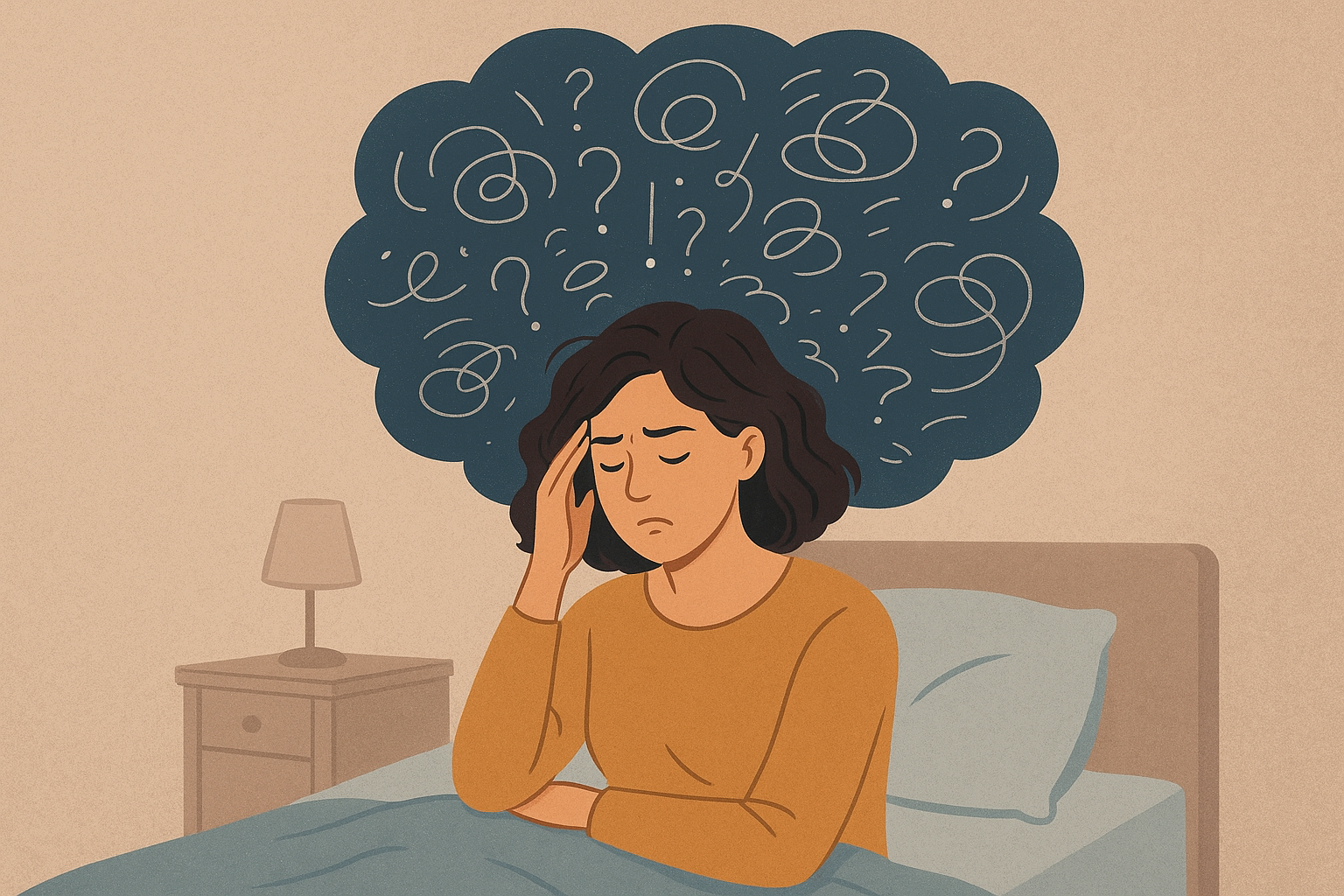
Ever replayed the same conversation in your head a hundred times—wondering what you should have said, what they really meant, and what could go wrong next?
That’s overthinking in action. And while it can feel like you’re “problem-solving,” it’s actually your brain pressing the gas pedal when what you really need is the brakes.
Why your mind does this
Your brain is wired to keep you safe. When it senses uncertainty—especially in relationships—it starts scanning for threats, replaying events, and imagining worst-case scenarios.
For many of us, this habit is tied to our attachment style. If you grew up unsure whether your needs would be met, your brain may now believe constant vigilance equals protection.
The science behind the spiral
Overthinking activates the brain’s default mode network—areas responsible for self-reflection and future planning. Helpful for problem-solving, yes, but in anxious states, it goes into overdrive.
Your amygdala (your brain’s “threat detector”) then pumps out stress hormones like cortisol, making your thoughts race even faster. Paired with attachment triggers, your mind can get stuck in a loop, convinced that thinking more will keep you safe… even when it’s only fuelling more anxiety.
The problem with overthinking
- It amplifies anxiety instead of easing it.
- It turns neutral situations into perceived threats.
- It drains your energy, making calm responses harder.
The good news? You can train your mind to spot the spiral and gently guide it back to calm.
Two calming tools to try today
1. The 5-4-3-2-1 Reset (from Beyond)
When your thoughts start looping, ground yourself in the present:
5 things you can see
4 things you can touch
3 things you can hear
2 things you can smell
1 thing you can taste
This interrupts the mental loop and reconnects you with your body.
2. The “Name It” Technique (from The Overthinker’s Guide)
When a thought repeats, label it:
“I’m having the thought that they don’t like me” instead of “They don’t like me.”
It’s a small shift, but it reminds your brain it’s just a thought—not a fact.
Your next step
Overthinking doesn’t vanish overnight, but every time you notice it and reset, you’re rewiring your brain toward calm.