If your body feels like it has a mind of its own in midlife, you are not alone.
Many women reach their 40s, 50s, or 60s and notice changes that feel confusing. Weight settles differently. Energy drops. Muscle tone feels harder to maintain. The same meals do not feel as satisfying. The same workouts do not bring the same results.
It is easy to blame willpower.
But willpower is not the whole story.
Midlife metabolism is shaped by hormones, muscle mass, movement, sleep, stress, nutrition, medications, genetics, and recovery. Menopause does not remove your power, but it does change the strategy.
What Changes During Menopause
The menopause transition is linked with body composition changes. Research shows that women can experience increased fat mass, especially in the abdominal region, and decreased fat-free mass during this stage. Those changes can happen even when scale weight stays similar.
That last part matters.
The scale may not show the full shift.
A woman can weigh the same and still have less muscle and more abdominal fat than she did before. She can also become stronger, move better, and improve her daily energy before the scale reflects anything dramatic.
This is why midlife health needs better metrics than weight alone.
Track strength. Track energy. Track consistency. Track waist changes if that is useful for your health. Track how your body performs in daily life.
The Metabolism Myth: It Is Not Just About Eating Less
For decades, women were told that the answer to body changes was simple: eat less and move more.
That advice is incomplete.
Eating less can create short-term weight loss for some people, but chronic under-fueling can backfire. It can make training harder, recovery slower, hunger stronger, and consistency harder to maintain. If protein is too low and strength training is missing, weight loss can also include lean mass loss.
That is not the goal after 50.
The goal is not just a smaller body.
The goal is a stronger, more capable body.
Why Muscle Is Central to Midlife Metabolism
Muscle is not just about looking toned.
Muscle supports:
Strength
Balance
Mobility
Bone health
Glucose handling
Daily function
Metabolic health
Independence
Less muscle makes life harder. Stairs feel harder. Groceries feel heavier. Recovery takes longer. Balance can become less steady.
More strength gives you more options.
This is why strength training belongs in the plan. The CDC recommends adults get at least 150 minutes of moderate-intensity activity each week and do muscle-strengthening activity on 2 or more days per week, working all major muscle groups.
That is a strong baseline.
You do not need to train every day. You do not need a gym. You do not need to lift heavy on day one.
You need a repeatable plan.
How to Start Strength Training After 50
Start with movements that carry over into real life.
Try:
Chair squats for standing up and sitting down with control
Wall pushups for upper-body strength
Step-ups for stairs and balance
Glute bridges for hips and stability
Resistance band rows for posture and back strength
Light dumbbell presses for shoulders and arms
Farmer carries for groceries and luggage
Begin with 1 to 2 sets. Use good form. Rest when needed. Stop if you feel sharp pain, dizziness, or anything that feels wrong.
Once the movements feel steady, add challenge.
Add a few reps. Add another set. Use a stronger band. Pick up a slightly heavier dumbbell. Increase range of motion. Move with more control.
Progress does not need to be dramatic. It needs to be steady.
Protein: The Building Block Women Often Miss
Strength training gives your body the signal.
Protein gives your body the building blocks.
The PROT-AGE Study Group recommends older adults consume at least 1.0 to 1.2 grams of protein per kilogram of body weight per day. It also advises higher protein intake for older adults who are exercising or otherwise active.
For many women, that means protein needs are higher than they expect.
You do not need to start by tracking every gram. Start by putting protein at each meal.
Breakfast options:
Eggs with fruit
Greek yogurt with berries
Cottage cheese with nuts
Tofu scramble
Protein smoothie
Leftovers from dinner
Lunch and dinner options:
Fish
Chicken
Turkey
Lean meat
Beans
Lentils
Tofu
Tempeh
Edamame
Pair protein with plants. Vegetables, fruit, beans, whole grains, nuts, and seeds add fiber, color, minerals, and satisfaction.
This is not about a protein-only diet.
It is about building meals that support muscle, energy, and recovery.
If you have kidney disease or reduced kidney function, talk with your clinician or registered dietitian before increasing protein.
Sleep and Stress Are Part of the Metabolism Conversation
Sleep is not a bonus habit.
It affects hunger, cravings, recovery, mood, training consistency, and energy.
Stress matters too. A stressful season can make routines harder to keep. It can also affect sleep, appetite, alcohol intake, snacking patterns, and motivation.
You do not need perfect sleep or a calm life to make progress.
You need better support.
Try:
A consistent wind-down routine
Less caffeine late in the day
A short walk after meals
Strength training earlier if evening workouts disrupt sleep
A realistic bedtime target
A plan for hard weeks
Recovery is not laziness. It is part of adaptation.
What You Can Control
You cannot stop menopause.
You cannot control every hormone shift, every genetic factor, or every stressful season.
You can control the next small step.
Start with the basics:
Strength train 2 days per week.
Eat protein at breakfast.
Build lunch and dinner around a protein source.
Walk most days, even for 10 minutes.
Prioritize sleep when possible.
Track strength, energy, and consistency.
Return after missed days without shame.
These habits do not require perfection. They require repetition.
Track Better Progress
The scale can be one data point, but it should not be the only one.
Track:
How many chair squats you can do
How much weight you can carry
How often you strength train
How steady you feel on stairs
How your energy feels after breakfast
How well you recover after workouts
How consistently you return after interruptions
How your clothes fit
How confident you feel in your body
These markers tell a fuller story.
Midlife progress often shows up first in your strength, energy, and self-trust.
Resource Spotlight
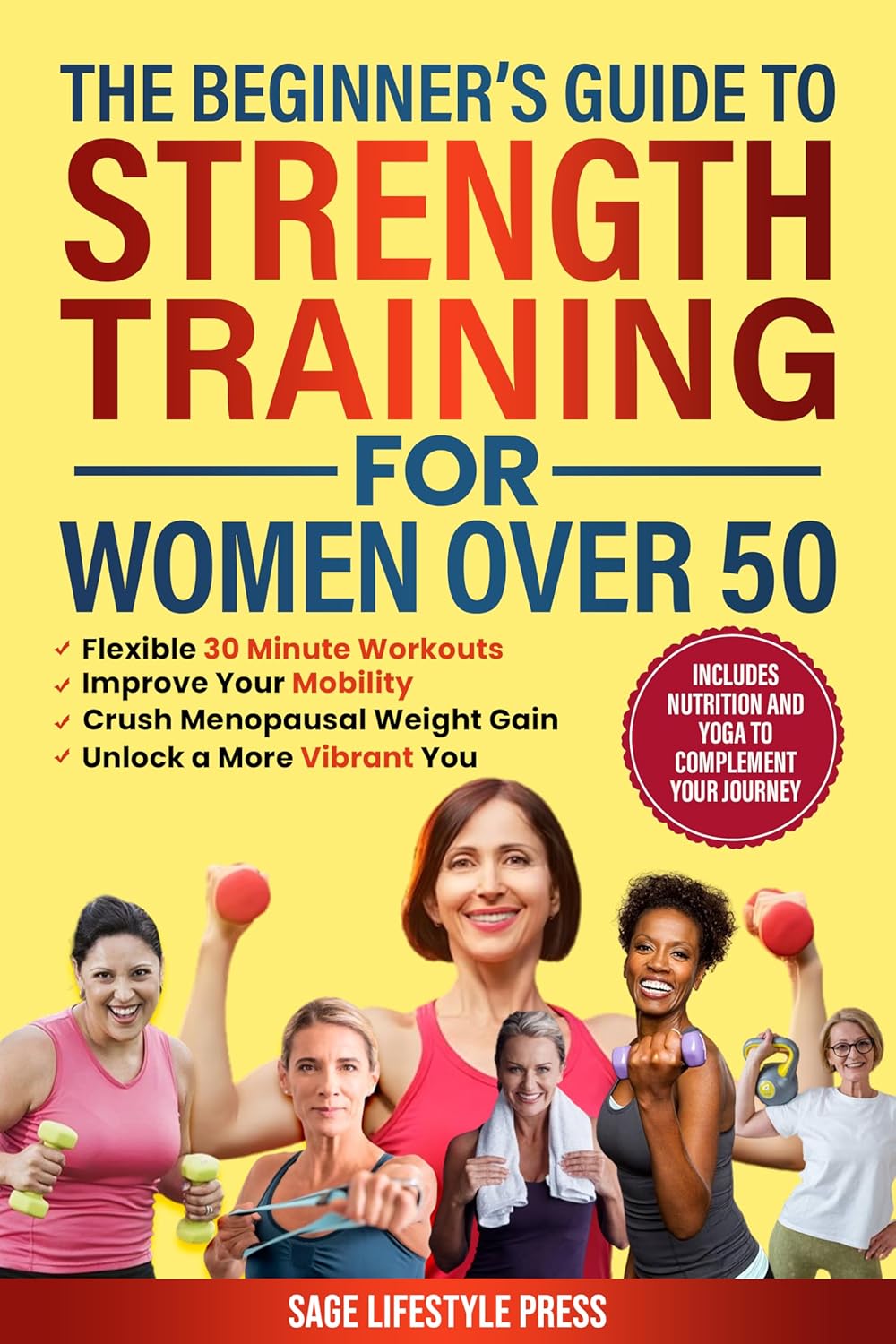
If you want a clear plan, The Beginner’s Guide to Strength Training for Women Over 50 was designed for real life.
It includes 30-minute at-home workouts, practical meal guidance, and support for building strength without needing a gym.
The Strength Training Success Workbook & Tracker can help you track meals, workouts, energy, and progress. Menopause Doesn’t Have to Suck offers additional support for navigating hormones, symptoms, and midlife body changes with more clarity.
The Bottom Line
Your body is not broken.
It is changing, and it needs a stronger strategy.
You cannot control every part of menopause, but you can build muscle, eat enough protein, support recovery, improve consistency, and measure progress in ways that actually matter.
Aging strong starts with what you do today.
Ready to build strength and support your metabolism at home?