
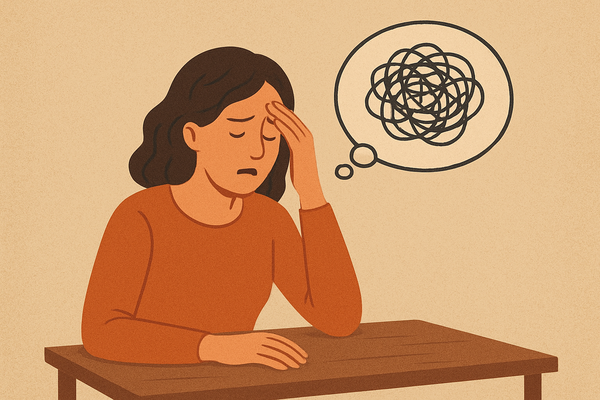
You know the feeling—one small comment, one text left unanswered, and suddenly your mind is in overdrive:
“They must be mad at me. I shouldn’t have said that. What if this ruins everything?”
This is a negative thought loop—a mental spiral that feeds itself until it feels impossible to escape.
Why this happens
Negative thought loops are fueled by your brain’s threat detection system. When something feels uncertain or emotionally charged, the brain tries to make sense of it by running scenarios—often worst-case ones.
For people with anxious or avoidant attachment tendencies, these loops can feel even stronger. That’s because the brain quickly links a present worry with past experiences of rejection, abandonment, or conflict.
The neuroscience of thought loops
When you fixate on a worry, your brain’s default mode network (DMN) and amygdala work together to keep the thought alive.
- The DMN generates endless “what if” scenarios.
- The amygdala pumps out stress hormones like cortisol, keeping your body on high alert.
Without intervention, this loop strengthens neural pathways that make the pattern easier to repeat in the future. That’s why catching it early matters so much.
The 3-step reframe to break the loop
1. Name it
Label the thought for what it is:
“I’m having the thought that they’re upset with me.”
This creates distance between you and the thought, loosening its emotional grip.
2. Challenge it
Ask yourself:
“What evidence do I have that this is true?”
“What other explanations could there be?”
Engaging your rational brain helps quiet your emotional brain.
3. Replace it
Choose a balanced, realistic alternative thought:
“They might just be busy right now.”
This gives your brain a calmer, less reactive pathway to follow.
Your next step
Breaking thought loops is a skill you can practice daily. The more you interrupt them, the more you retrain your brain to default to clarity instead of rumination.