If your old eating habits no longer work the way they used to, your body is not broken.
It may need a new strategy.
I learned this lesson myself. After leukemia treatment, a stem cell transplant, and entering my 50s and 60s, I realized that the nutrition advice many women grew up with was no longer serving us. Eating less wasn’t helping me stay strong. Learning how to fuel my body with adequate protein and strength training changed the conversation entirely.
Today, through Sage Lifestyle Collective, I help women understand that healthy aging is not about shrinking themselves. It is about building strength, resilience, and confidence for the decades ahead.
Many women notice the shift in their 40s, 50s, or 60s. Energy changes. Recovery feels slower. Strength becomes harder to maintain. A breakfast that used to feel “light and healthy” now leaves you hungry by 10 a.m. A dinner salad without enough protein no longer carries you through the evening.
This is not a failure of discipline.
It is a sign that midlife nutrition needs to focus on fueling, not shrinking.
Protein is one of the most practical places to start.
Why Protein Matters More After 40
Protein supports muscle repair, recovery, fullness, immune function, and healthy aging. It also provides the building blocks your body needs when you strength train.
As we age, muscles become less responsive to the usual signals from protein and exercise. This is often called anabolic resistance. The PROT-AGE Study Group states that older adults need more dietary protein than younger adults to support health, recovery from illness, and function. It recommends at least 1.0 to 1.2 grams of protein per kilogram of body weight per day for older adults.
That matters because muscle is not just about how your arms or legs look.
Muscle helps you climb stairs, carry groceries, lift luggage, stay balanced, recover from setbacks, and remain independent.
Protein does not do that alone. Strength training matters too. But protein gives your body the raw materials to respond to training.
How Much Protein Do Women Over 40 Need?
There is no single perfect number for every woman.
Your protein needs depend on body weight, activity level, medical history, strength goals, appetite, and overall diet.
A useful evidence-based starting point is this:
Many older adults benefit from at least 1.0 to 1.2 grams of protein per kilogram of body weight per day, based on PROT-AGE recommendations.
Active women, strength-training women, or women working to preserve muscle may need more. The International Society of Sports Nutrition states that 1.4 to 2.0 grams of protein per kilogram of body weight per day is sufficient for most exercising individuals.
For many women, a realistic target may land around 75 to 110 grams per day.
Examples:
A 140-pound woman is about 64 kilograms.
At 1.2 g/kg, that is about 77 grams per day.
At 1.5 g/kg, that is about 96 grams per day.
A 165-pound woman is about 75 kilograms.
At 1.2 g/kg, that is about 90 grams per day.
At 1.5 g/kg, that is about 113 grams per day.
You do not need to obsess over numbers. Use them as a guide, then watch your energy, hunger, recovery, strength, and consistency.
Start With Breakfast
Breakfast is where many women under-eat protein.
Coffee and toast may be quick, but they rarely provide enough support for strength, energy, and appetite control. A protein-forward breakfast can help set up the rest of the day.
Try:
Greek yogurt with berries and nuts
Eggs with fruit and whole grain toast
Cottage cheese with fruit
A protein smoothie with Greek yogurt or protein powder
Tofu scramble with vegetables
Leftover chicken, turkey, beans, or salmon from dinner
The goal is not a perfect breakfast. The goal is a breakfast that gives your body something useful to work with.
Build Every Meal Around a Protein Anchor
A protein anchor is the part of the meal that clearly provides protein.
Good options include:
Eggs
Fish
Chicken
Turkey
Lean meat
Greek yogurt
Cottage cheese
Tofu
Tempeh
Beans
Lentils
Edamame
Protein smoothies
Once the protein anchor is in place, add color and fiber.
That might mean vegetables, fruit, beans, lentils, oats, quinoa, potatoes, whole grains, nuts, or seeds.
A balanced plate might look like:
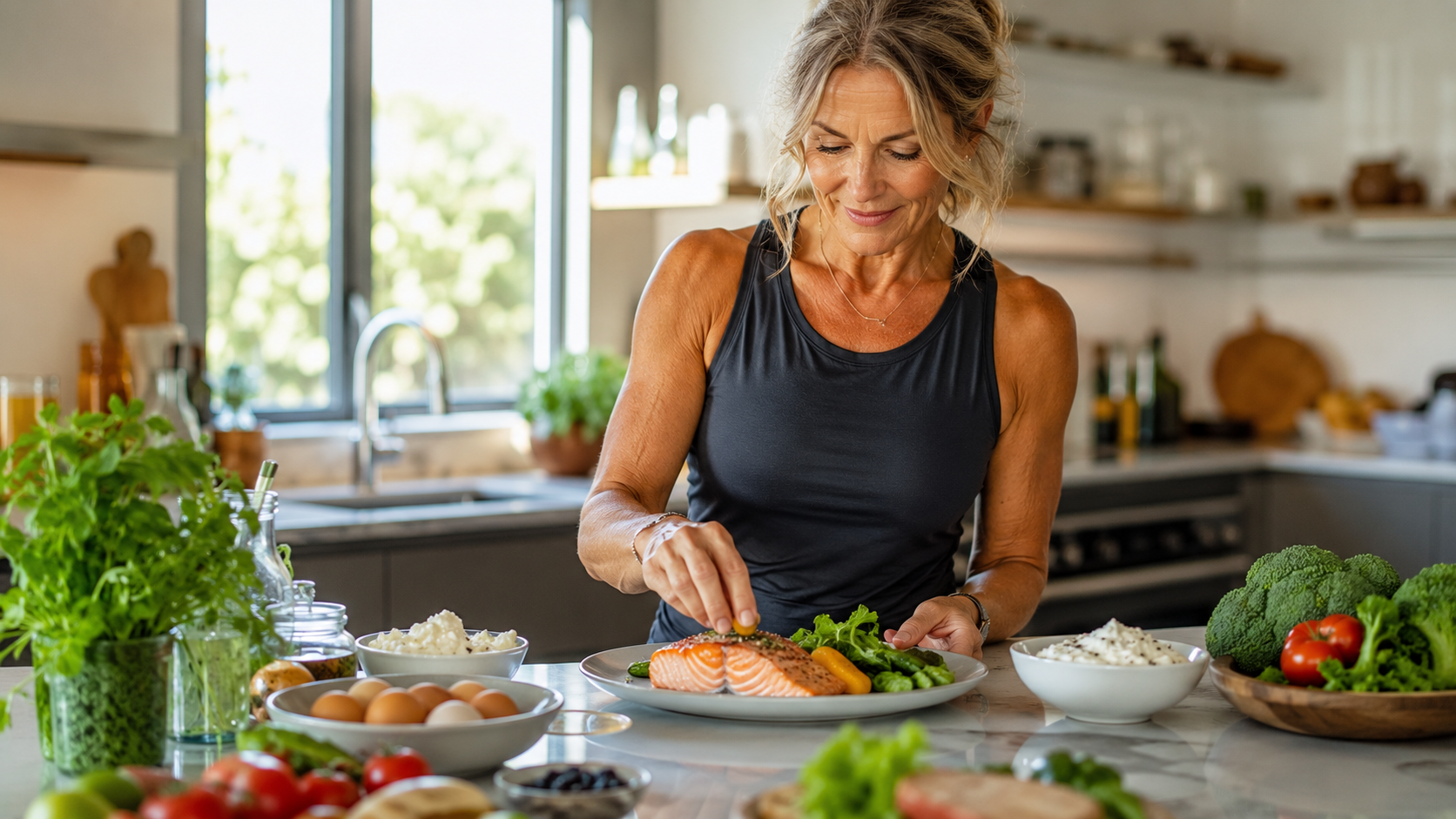
Salmon, roasted vegetables, and sweet potato
Chicken, salad, avocado, and quinoa
Tofu stir-fry with vegetables and rice
Greek yogurt with berries, chia seeds, and walnuts
Lentil soup with a side salad
Eggs with spinach and whole grain toast
Protein-forward does not mean protein-only. Your body still needs carbohydrates, fiber, and healthy fats.
Protein and Strength Training Work Together
Protein is powerful, but it works best when paired with resistance training.
Strength training tells your body to keep and build muscle. Protein gives your body the building blocks to repair and adapt.
The CDC recommends adults get 150 minutes of moderate-intensity activity each week and do muscle-strengthening activity on at least 2 days per week.
Start with two days.
You can use bodyweight, resistance bands, dumbbells, or machines. You can train at home. You can begin with short sessions.
Beginner-friendly movements include:
Chair squats
Wall pushups
Step-ups
Glute bridges
Resistance band rows
Light dumbbell presses
Farmer carries
You do not need a perfect program to start. You need a repeatable one.
Common Protein Myths
Myth 1: Protein is only for bodybuilders.
Protein is for anyone who wants to preserve muscle, recover well, and stay capable with age. That includes women in midlife.
Myth 2: More protein means eating meat all day.
Animal proteins can be useful, but they are not the only option. Beans, lentils, tofu, tempeh, edamame, Greek yogurt, cottage cheese, eggs, nuts, seeds, and whole grains can all contribute.
Plant-based eaters may need more planning, but they can absolutely build protein-rich meals.
Myth 3: Higher protein always harms the kidneys.
For healthy adults, higher protein intake can fit into an active lifestyle. The kidney conversation changes if you have chronic kidney disease. The National Kidney Foundation advises people with CKD to work with a dietitian because protein needs depend on disease stage, dialysis status, weight, diabetes, and nutritional status.
If you have kidney disease or reduced kidney function, talk with your clinician before increasing protein.
Make Protein Easier
Keep it simple.
Cook extra protein at dinner so you have leftovers.
Keep Greek yogurt, cottage cheese, eggs, tuna, tofu, or cooked chicken ready.
Add beans or lentils to soups and salads.
Use edamame as a snack.
Blend a smoothie when appetite is low.
Pair protein with produce so meals feel satisfying.
Do not wait until you have the perfect meal plan. Start with one meal.
Resource Spotlight
If you want a clear, supportive guide to pairing nutrition with strength, The Beginner’s Guide to Strength Training for Women Over 50 is designed for you.
It includes 30-minute at-home workouts, step-by-step strength guidance, and practical meal strategies for women who want to build strength without gym intimidation or perfection.
The Strength Training Success Workbook & Tracker can help you track meals, workouts, strength wins, and progress that the scale misses.
The Bottom Line
Protein after 40 is not a trend.
It is a practical tool for strength, energy, recovery, and healthy aging.
You do not need to eat perfectly. You do not need to become a bodybuilder. You do not need to track forever.
Start by adding protein to breakfast. Build meals around a protein anchor. Pair protein with plants. Strength train twice a week. Track how you feel.
Your body is still capable.
Fuel it like you believe that.
Why This Topic Matters to Me
One of the biggest myths I see among women over 50 is the belief that getting weaker is simply part of aging.
I don’t believe that.
While aging brings changes, many women can dramatically improve their strength, mobility, energy, and confidence when they combine sensible nutrition with consistent resistance training.
That belief has shaped much of my work as an author and founder of Sage Lifestyle Collective, and it is why so many of my books focus on helping women stay active and independent as they age.