Ever wondered why you attract the same type of partner—or why the same arguments follow you from one relationship to the next?
It’s not bad luck.
It’s the attachment script your brain wrote years ago, quietly running in the background of your life.
Why this happens
Your attachment style is shaped in early childhood, based on how consistently (or inconsistently) your needs were met by your caregivers. Over time, your brain stores these patterns as a “relationship template.”
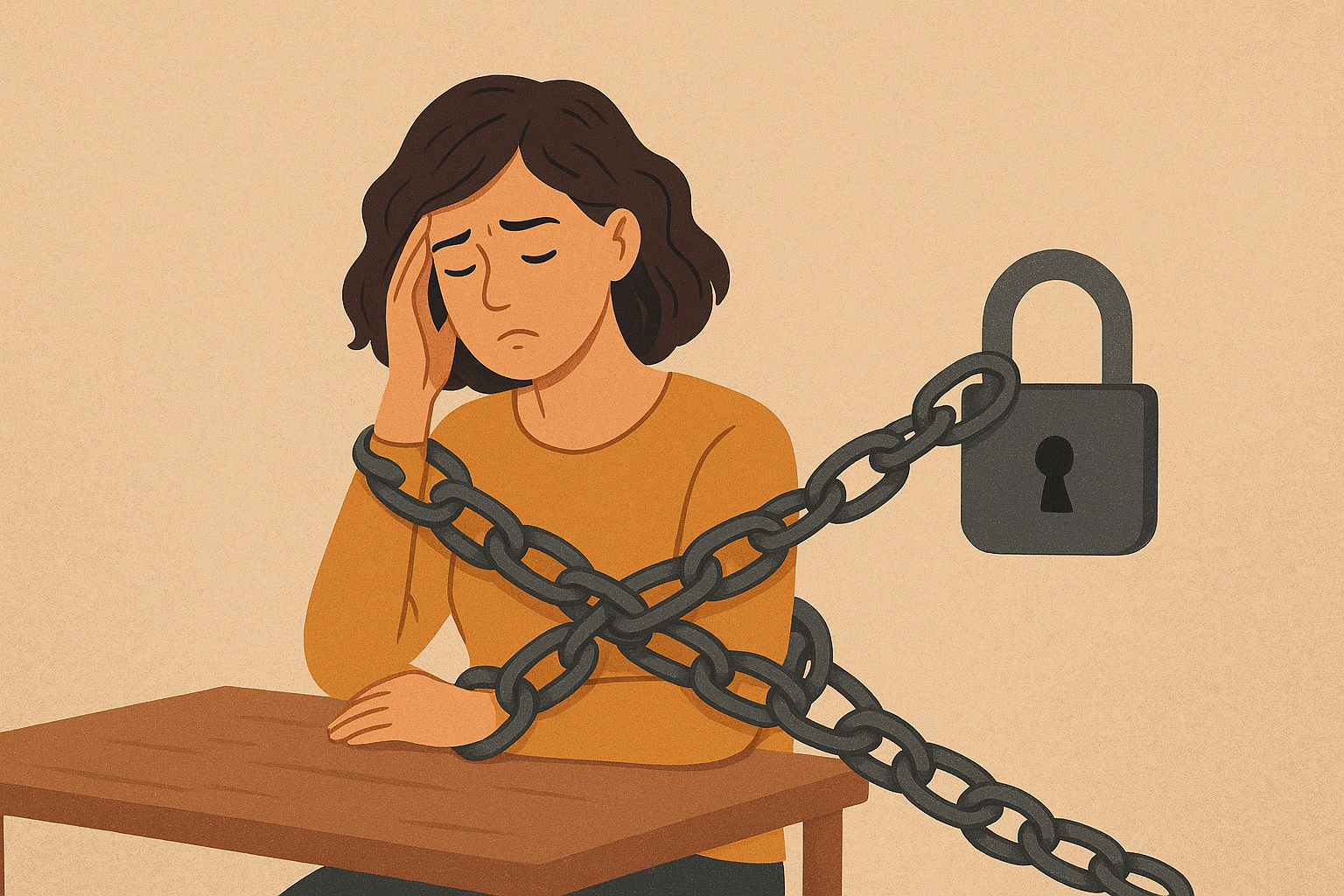
The problem? If that template is rooted in insecurity, unpredictability, or emotional distance, your adult relationships may end up replaying those same dynamics—even when they hurt.
The science behind attachment traps
Attachment behaviors are wired into the limbic system, the brain’s emotional center. When a situation triggers an old wound—say, your partner doesn’t respond to a text—you’re not just reacting to this moment. Your brain is also replaying every past moment when you felt ignored, rejected, or abandoned.
In insecure attachment styles (anxious, avoidant, or disorganized), the amygdala can hijack the rational prefrontal cortex, making you react faster and more emotionally than the situation calls for. That’s why logic alone often isn’t enough—you have to work at both the emotional and cognitive levels.
The four attachment styles at a glance
- Secure: Comfortable with closeness and independence.
- Anxious: Craves closeness but fears abandonment.
- Avoidant: Values independence but struggles with intimacy.
- Disorganized: Desires connection but fears it due to past trauma.
Breaking free from attachment traps
- Notice the trigger. Pause and ask: “Am I reacting to the present or to my past?”
- Regulate before you communicate. Use calming techniques (breathing, grounding, movement) before responding.
- Rewire through new experiences. Each time you respond differently—and it ends well—you’re teaching your brain that safety and connection are possible.
Your next step
You’re not doomed to repeat old patterns. With awareness, self-compassion, and the right tools, you can create a healthier blueprint for love.